
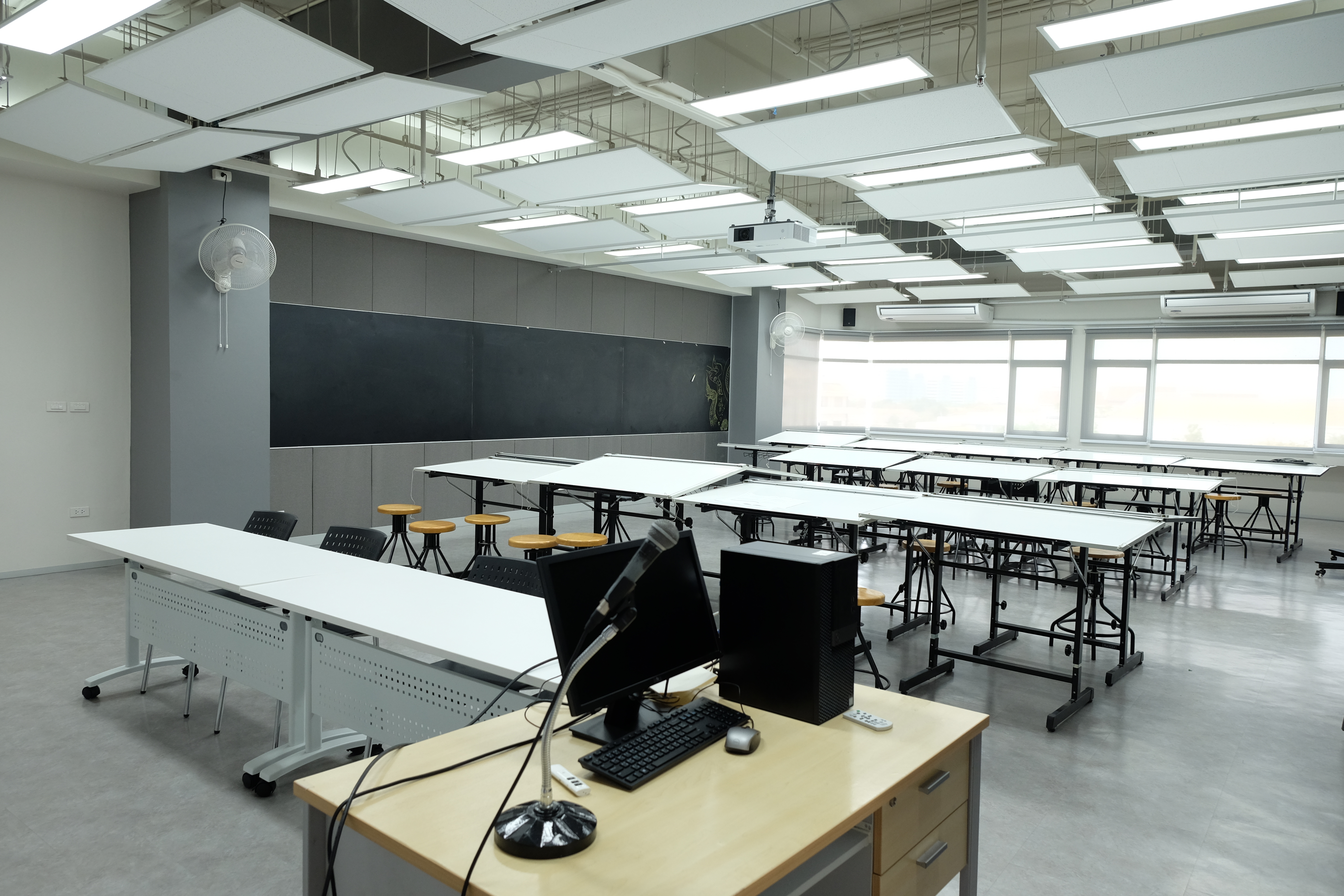
การศึกษาเรื่อง การออกแบบกลยุทธ์อาคารในอสังหาริมทรัพย์ขององค์กร เป็นส่วนหนึ่งของ โครงการศึกษา โดยทุนส่งเสริมการวิจัยด้วยการสอนขั้นสูง ประจำปีงบประมาณ 2563 มีวัตถุประสงค์เพื่อนำเสนอข้อมูลในการปรับปรุงและพัฒนาแนวคิดที่ใช้อธิบายและวิเคราะห์ความสมดุลระหว่างปัจจัยด้านความต้องการ ในการใช้พื้นที่ของผู้ใช้งานอาคาร (Demand) และองค์ประกอบด้านสภาพแวดล้อมกายภาพ (Supply) ซึ่งประกอบด้วยอาคาร พื้นที่อาคาร และองค์ประกอบสนับสนุน งานวิจัยนี้ใช้ แนวคิด Designing an Accommodation Strategy (DAS) framework ในการตรวจสอบแนวทางในการพัฒนาอาคารคณะสถาปัตยกรรมศาสตร์และการผังเมือง การเก็บข้อมูลประกอบด้วย การเก็บข้อมูลเอกสาร ที่มาจากรายงานโครงการในวิชา สถ.695 การวางแผนและการบริหารจัดการทรัพยากรอาคาร ซึ่งได้เน้นการมีส่วนร่วมของนักศึกษาในการ อภิปราย และวิเคราะห์ข้อมูลจากการลงสำรวจพื้นที่ และการสัมภาษณ์ผู้บริหารคณะฯ นอกจากนี้ การวิเคราะห์ข้อมูลเอกสารยังรวมถึง ข้อมูลจากรายงานฉบับสมบูรณ์ โครงการจัดทำแผนพัฒนากายภาพ คณะสถาปัตยกรรมศาสตร์และการผังเมือง การสัมภาษณ์กึ่งโครงสร้างกับผู้ช่วยคณบดีฝ่ายพัฒนากายภาพ ได้ข้อมูลที่ใช้ในการวิเคราะห์และการตรวจสอบข้อมูลอื่น ๆ
ผลการศึกษาแสดงให้เห็นถึงความยากลำบากในการตัดสินใจ ที่เกี่ยวข้องกับความไม่สมดุลระหว่างความต้องการและพื้นที่อาคาร ปัจจัยที่สำคัญที่ส่งผลต่อความไม่สมดุลนี้มีผลมาจาก ความเสื่อมสภาพของอาคาร (ความเสื่อมสภาพทางกายภาพ การใช้งาน และ เทคโนโลยี) ซึ่งไม่ตอบสนองต่อความเปลี่ยนแปลงในความต้องการของนักศึกษา ปัจจัยต่อมาคือ มุมมองระหว่างนักศึกษาและผู้ดำเนินงานเกี่ยวกับอาคารคณะฯ เช่น ความต้องการในการเข้าใช้พื้นที่คณะฯ ได้ตลอด 24 ชั่วโมงของนักศึกษา จะต้องคำนึงถึงนโยบายด้านความปลอดภัยควบคู่กันไปด้วย
นอกจากความต้องการด้านจำนวนพื้นที่ ผลการศึกษายังแสดงให้เห็นถึงความต้องการด้านอื่นๆ เช่น ความยืดหยุ่น (Flexibility) ความยั่งยืน (Sustainability) และคุณภาพด้านความสวยงาม (Aesthetic quality) ซึ่งพิจารณาจากความต้องการในการใช้พื้นที่ (Demand) พื้นที่อาคาร (Supply) และความสมดุลหรือไม่สมดุลจากอาคารสถานที่ และอสังหาริมทรัพย์ขององค์กร ในด้านการสร้างคุณค่า การศึกษานี้แสดงถึงความสำคัญของสภาพแวดล้อมในการเรียนรู้ ซึ่งสนับสนุนการเรียนแบบ Active learning ในการศึกษาสถาปัตยกรรม และส่งผลต่อความผูกพันกับสถานที่ซึ่งแสดงให้เห็นคุณค่าเชิงวัฒนธรรม ข้อเสนอแนะและสิ่งที่เรียนรู้ได้จากการพัฒนาแนวคิด DAS framework มีดังนี้
- แนวทางการบริหารแบบ Top-down สนับสนุนการดำเนินงาน องค์กรที่มีแผนในการใช้แนวคิด DAS framework มักประสบปัญหาในการดำเนินงาน เนื่องจากขั้นตอนที่เกี่ยวข้องกับผู้ร่วมโครงการที่มีความหลากหลาย ความชัดเจนในทิศทางของแผน (Strategic direction) ของผู้บริหารองค์กรที่สามารถแปลงเป็นขั้นตอนการดำเนินงานในระดับปฏิบัติการ จะช่วยในการรวบรวมข้อมูลจากผู้มีส่วนร่วมโครงการ
- การสื่อสารส่งเสริมการมีส่วนร่วมของผู้เกี่ยวข้อง ความชัดเจนในการสื่อสาร เช่น การแจ้งกรอบเวลาของโครงการ วัตถุประสงค์และผลที่คาดหวัง ตลอดจนถึงขั้นตอนต่าง ๆ ของโครงการ จะทำให้ผู้มีส่วนร่วมทราบและเข้าใจในแผนการต่าง ๆ ในการดำเนินงาน และให้ความร่วมมือมากขึ้น
- วิธีการในการเก็บข้อมูลช่วงก่อนการออกแบบ ขึ้นอยู่กับลักษณะของโครงการ การเก็บข้อมูลก่อนการออกแบบ (Pre-design evaluation) ช่วยในการทำความเข้าใจในความต้องการของผู้มีส่วนร่วมในโครงการ ซึ่งแต่ละโครงการมีลักษณะเฉพาะ ทั้งขนาด ขอบเขต และทรัพยากร จึงต้องการเทคนิคในการเก็บข้อมูลที่แตกต่างกันออกไป เช่น การวิเคราะห์เอกสาร การสัมภาษณ์ การประเมินการใช้งานพื้นที่ ซึ่งสอดคล้องกับลักษณะของโครงการ
- การประเมินหลังการใช้งานอาคาร (Post-occupancy evaluation: POE) ควรอยู่ในขั้นตอนของแนวคิด DAS framework เพื่อการนำผลตอบรับ (Feedback) จากการใช้และประสิทธิภาพของพื้นที่ เพื่อการปรับปรุงและพัฒนาแนวทางในการบริหารจัดการพื้นที่ในขั้นตอนต่อไป
ข้อเสนอแนะในการศึกษาขั้นต่อไปเน้นที่ การเพิ่มคุณค่า (Added value) เป้าหมายหลักของการบริหารจัดการอาคารและอสังหาริมทรัพย์องค์กร (Facility and real estate management) คือการเพิ่มคุณค่าให้กับอาคารและอสังหาริมทรัพย์ POE สามารถเป็นแนวทางสนับสนุนการสร้างคุณค่าให้กับอาคารได้ ถึงแม้ว่าแนวคิด DAS framework สามารถใช้ในการประเมินความสอดคล้องและแก้ปัญหาระหว่างความต้องการพื้นที่และอาคารสถานที่ขององค์กรได้ แต่ก็ยังมีความจำเป็นในการศึกษาเพิ่มเติม ในการเพิ่มคุณค่าจากแนวทางแก้ปัญหานั้น คำถามที่ใช้เป็นแนวทางในการศึกษาขั้นต่อไป เช่น จะสามารถใช้ POE ในแนวคิด DAS framework เพื่อการปรับปรุงและเพิ่มคุณค่าให้กับอาคารได้อย่างไร?
The study explores the need for space (demand) and the provision thereof (supply) in the Faculty of Architecture’s building at Thammasat University’s Rangsit campus using variables from the designing an accommodation strategy (DAS) framework; these variables are incorporated to test and improve the framework. Another purpose is to examine the planning and development of the faculty building.
Methodology: A case study was conducted on the Faculty of Architecture building at Thammasat University, Thailand. The DAS framework was used to reconstruct and examine the development process of the building to determine the gaps between supply and demand in terms of building space, to reflect the building plan and process, and to make suggestions as to how the DAS framework might be improved. Research methods included interviews and document analysis concerning space requirements and provision in the Faculty of Architecture building.
Findings: The gaps between supply and demand in terms of the faculty building’s space are affected by the condition of the building (i.e., building obsolescence), the number of building users, and changing environmental contexts. The study shows that both pre-design and post-occupancy evaluation are essential to collect data concerning the match or mismatch between supply and demand of space and to assess users’ needs and preferences concerning the faculty building. Regarding the building development process, factors impacting the step-by-step planning of the real estate interventions include the organisational context (public/private sector) and the management of the construction project (time, cost, quality). The DAS framework is found to be useful for structuring the information-generating processes necessary to determine gaps between demand and supply in terms of space and for making decisions regarding real estate interventions. To improve the DAS framework, it is recommended that another stage be added to the framework in which current and future demands in terms of space are determined to identify changing needs in this regard.
Research limitations: Additional case studies in different environmental and organisational contexts are required to test the DAS framework and improve data validity. The study was conducted during the COVID-19 pandemic period, which affected data accessibility.
Practical implications: The results provide insight into the influence of various factors on the decision of corporate real estate. The findings from the DAS framework were used to compare a variety of approaches to different (i.e., current and future) states with regard to supply and demand and can be applied to evaluate and analyse matches or mismatches between requirements and the provision of building spaces.
Originality/value: This paper applies the DAS framework to examine users’ requirements concerning building spaces in relation to the provision thereof and contributes to research on facilities management and corporate real estate management. The study shows that pre-design evaluation and post-occupancy evaluation can be applied as part of the DAS framework. The findings confirm the importance of the physical learning environment of architecture schools, particularly the studio spaces required in architecture education.
Keywords: Architecture education, post-occupancy evaluation, pre-design evaluation, online education, design studios, users’ needs and preferences

 fremtu.com